Deadlock City Never Sleeps Guide: What to Learn Before Your Next Match
Joining or returning to Deadlock? Learn the changed city, Popular Items, Sandbox tools, and the announced hero rollout after City Never Sleeps.
In this article
Relearn the city before chasing a new build. Deadlock’s City Never Sleeps update changes the map, replaces familiar neutrals with Haunts that have new behaviors, and gives you more useful ways to explore, shop, and practice. If you’re returning, an old route deserves another look. If you’re joining, the practice tools deserve your attention before a pile of item recommendations does.
The interest is certainly there: SteamDB reports a peak of 228,086 concurrent Steam players on September 29, 2026 (opens in a new tab). This guide covers the update announced that day, with access and release information checked October 1.
Getting in still takes an invite
Valve’s Steam store page (opens in a new tab) still describes Deadlock as an early-development build, with temporary art and experimental gameplay. Access remains limited to friend invites from existing playtesters. A busy player count doesn’t make City Never Sleeps a public launch.
The release date is still To be announced, and the minimum processor and graphics requirements are TBD. I’d wait for official CPU and GPU requirements before buying hardware specifically for Deadlock.
Once you have access, give the changed city some attention. It’s the part of this update that reaches beyond whichever hero you choose.
The city has resources with strings attached
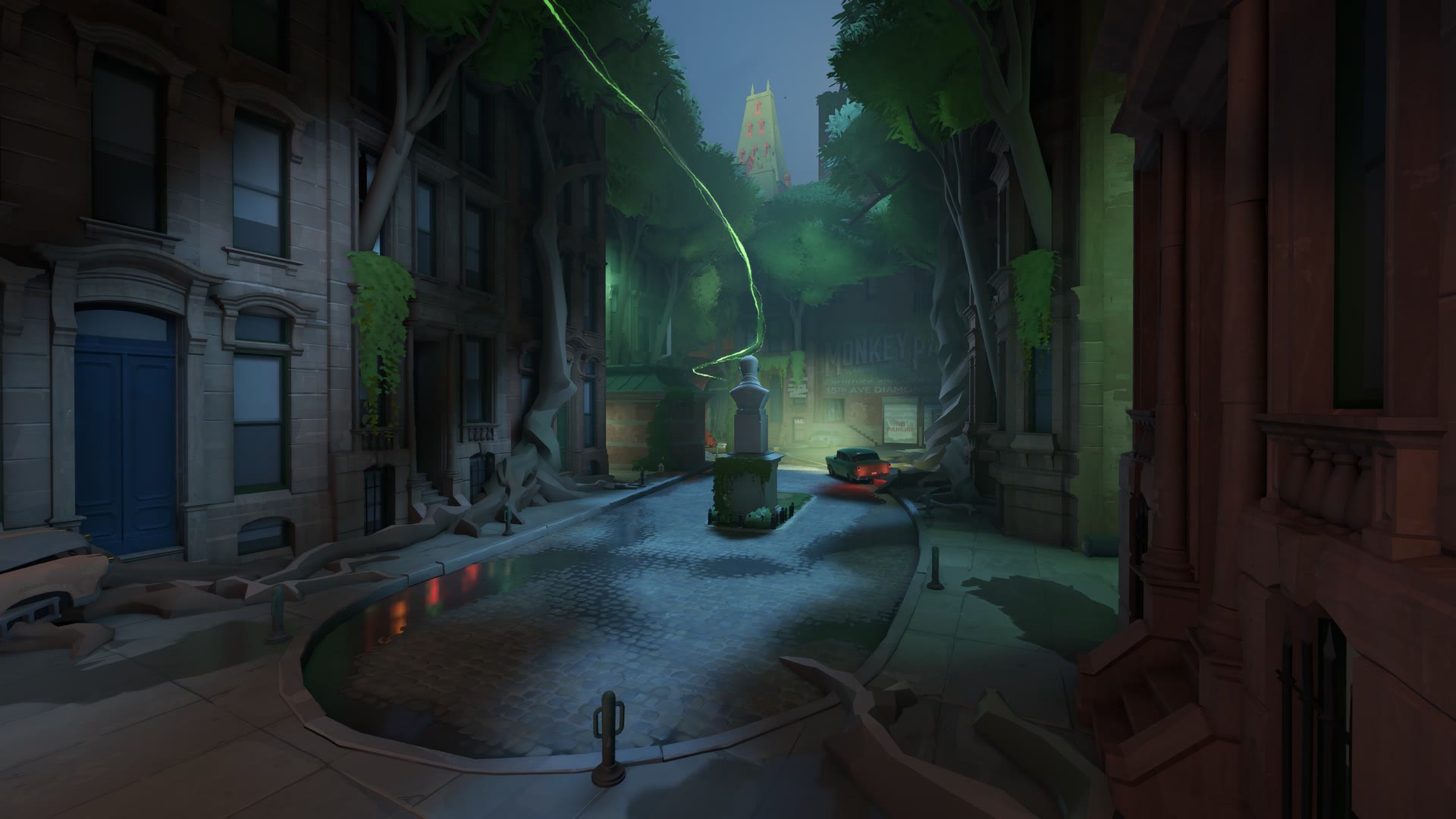
Valve’s City Never Sleeps page (opens in a new tab) introduces Haunts in place of the neutrals returning players remember. These creatures have new behaviors, so recognizing a camp’s location isn’t the same as knowing what you’ll find there. The four districts between the main streets are Theater, Chinatown, Haunted Lot, and Plaza.
Explore NYC and the Sandbox give you somewhere to get your bearings. I’d use that time to connect district names with actual places, then look at the resources whose conditions change a decision. An unfamiliar street is one problem; an unfamiliar reward that announces your presence is another.
| Place or resource | What Valve describes | What deserves your attention |
|---|---|---|
| Chinatown Bell Tower | A concentrated soul hotspot; collecting rewards rings a bell across the map | The reward also broadcasts that somebody is collecting it |
| Tough Crates | Extra souls, opened with Heavy Melee | The required action matters when you approach a crate |
| Sunken Plaza | Outside sound and stamina fade as you descend | The surroundings affect both what you hear and your stamina |
| Steam Vents | Invisibility and a small amount of regeneration while standing on a vent | The benefit is tied to remaining on the vent |
The Bell Tower is the clearest example of why a memorized collection route needs more thought. The bell is part of the deal. Knowing where the souls are doesn’t remove the information you’re giving away by taking them. That makes the location worth understanding even before you have enough match experience to judge when a visit pays off.
Sunken Plaza deserves similar attention for a different reason: its descent changes outside sound and stamina. Explore it with those changes in mind before making it part of a familiar route. Steam Vents give invisibility and a little regeneration while you stand on them, so learn their positions alongside the streets you’ll move through. Their benefit is tied to the vent; plan your next move before stepping away.
Popular Items is a reference you can work with
The shop’s Popular Items feature uses live player data to surface your hero’s frequently purchased items. Tooltips show how often an item is bought and the phase of the game when players buy it. That’s useful context when you’re staring at a shop full of choices after a break.
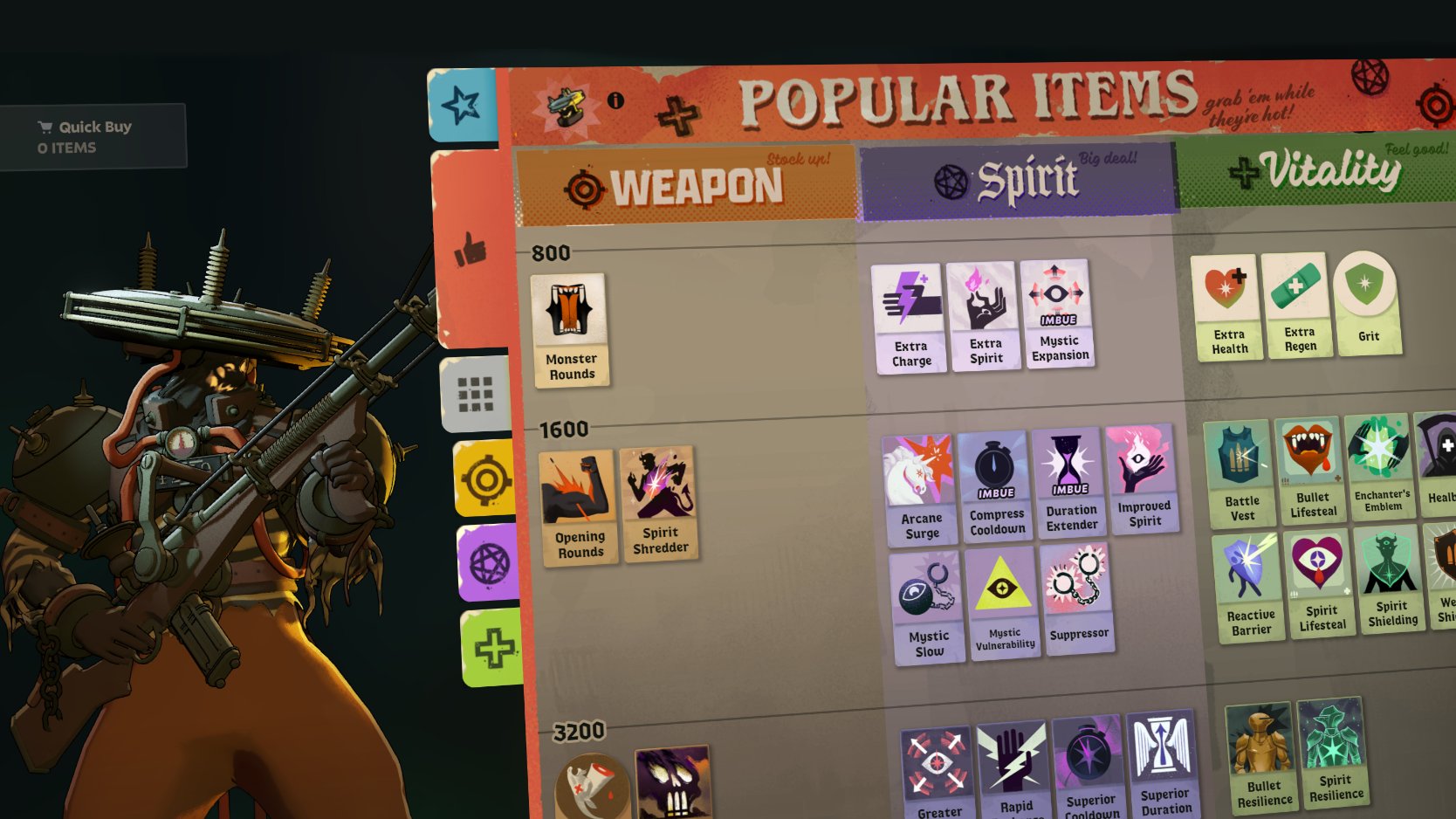
I’d start there, then read what the purchases actually do. Purchase frequency answers what players are buying; it doesn’t establish why an item fits your next match, or which build wins most often. The game-phase information is especially worth reading because it adds context that a bare list of popular purchases loses. Valve describes the feature in its shop update (opens in a new tab).
The Sandbox lets you try those purchases and compare builds before taking them into a match. Its tools include bot action recording and playback, a detailed combat log, a movement-speed graph, and damage tracking. Instead of copying several unfamiliar purchases and hoping their purpose becomes obvious, you can explore the item choices with tools that expose more of what your hero is doing.
Each tool answers a different question. The combat log breaks down actions against a bot. The speed graph shows movement speed. The damage display shows DPS and total damage; Valve says combat ends three seconds after your last hit, with the result remaining until you deal damage again. DPS here means damage per second, so it won’t tell you your PC’s frame rate.
Sandbox results also need their setting kept in mind. A comparison against a bot can help explain a choice without proving that it is the strongest purchase in a live match.
Make the HUD and controls familiar
The readability changes are worth learning alongside the map. Valve adds health and stamina information, objective information, minimap lane and district labels, and respawn timers visible near Haunt camps and Midboss. Those labels help turn an unfamiliar district name into a usable callout; the nearby timers give you information at the place it matters. The official update lists these HUD additions (opens in a new tab).
Controls have received attention too. Settings codes can be previewed before applying them and undone afterward, while numerous settings can be adjusted per hero. That makes a shared setup easier to inspect without committing to every choice its author made.
The accessibility options are personal choices worth reading, rather than a competitive preset to copy wholesale:
- Reduced Camera Shake reduces shake from impacts, explosions, and other effects.
- Auto Move lets a double-tap of Move Forward continue movement; Move Forward or Move Back stops it.
- Auto Mantle handles ledges you walk into while moving forward or backward on the ground without pressing Jump.
- Auto Fire keeps the weapon firing without holding Fire; pressing Fire stops it, and pressing again resumes it.
Choose according to the behavior you want. Reduced Camera Shake is a visual preference here, with no measured FPS gain attached. Auto Fire changes how you operate the weapon; it isn’t evidence of better aim.
When you’re ready to play an unfamiliar hero, Standard Mode is the sensible next stop. Valve’s Matchmaking Update (opens in a new tab) describes it as unranked and lower stakes, with matchmaking accounting for your experience on that hero. That gives the mode a useful purpose for returning players, although it doesn’t promise easy opponents.
Six heroes are announced on a schedule
As of October 1, Valve has revealed six heroes and lets players vote on their release order. The first release is announced for October 2, 2026, followed by two releases each week on Tuesdays and Fridays at 2 pm PT. Treat that as the announced rollout (opens in a new tab), rather than six immediately playable additions.
The Broker has an even shorter window. This temporary figure lets you exchange high-tier items for Corrupted versions with randomized negative attributes. Valve says he leaves when the first new hero arrives. With that arrival scheduled for October 2, he isn’t a sound foundation for a lasting returning-player routine.
Spend the preparation time on things you’ll keep using: knowing the districts, understanding the shop, and getting comfortable with your hero’s controls. For the PC side of your next session, Hone’s Deadlock page (opens in a new tab) explains its Windows optimization offering, with the app available from Hone’s download page (opens in a new tab).
Frequently asked questions
How do I get access to Deadlock?
As of October 1, 2026, Valve says access remains limited to friend invites from existing playtesters. Deadlock is still in early development; the City Never Sleeps update is not a public launch.
Are all six new Deadlock heroes playable now?
Valve revealed six heroes and announced a staggered release starting October 2, 2026. Players vote on release order, with two heroes scheduled each week on Tuesdays and Fridays at 2 pm PT. This is the announced schedule as checked October 1, not confirmation that all six have released.
Does Popular Items show the best Deadlock build?
Popular Items shows frequently purchased items for your hero using live player data, with purchase frequency and game-phase information in tooltips. That describes popularity, not a proven best build or a win-rate ranking. Use it as a reference and explore item choices in the Sandbox.
What are the official Deadlock PC requirements?
As of October 1, 2026, the Steam store still lists the minimum processor and graphics requirements as TBD and the release date as To be announced. There is no announced CPU or GPU specification to use as an official buying recommendation.

Written by
Digital Marketing Manager
Keep reading