


Your Blender viewport drops to 5 FPS when you add a subdivision modifier. The render crashes halfway through without warning. Your entire project vanishes in an instant. Hours of work gone.
This guide shows how to fix Blender lagging and crashing on PC. You will learn hardware bottleneck diagnosis, critical Windows registry fixes, GPU driver optimization, and scene management techniques that prevent crashes and restore smooth viewport performance.
Diagnose Your Blender Performance Issue
Identify whether you have a hardware bottleneck, Windows configuration problem, or scene optimization issue.
Critical Windows Fix for Blender Crashes
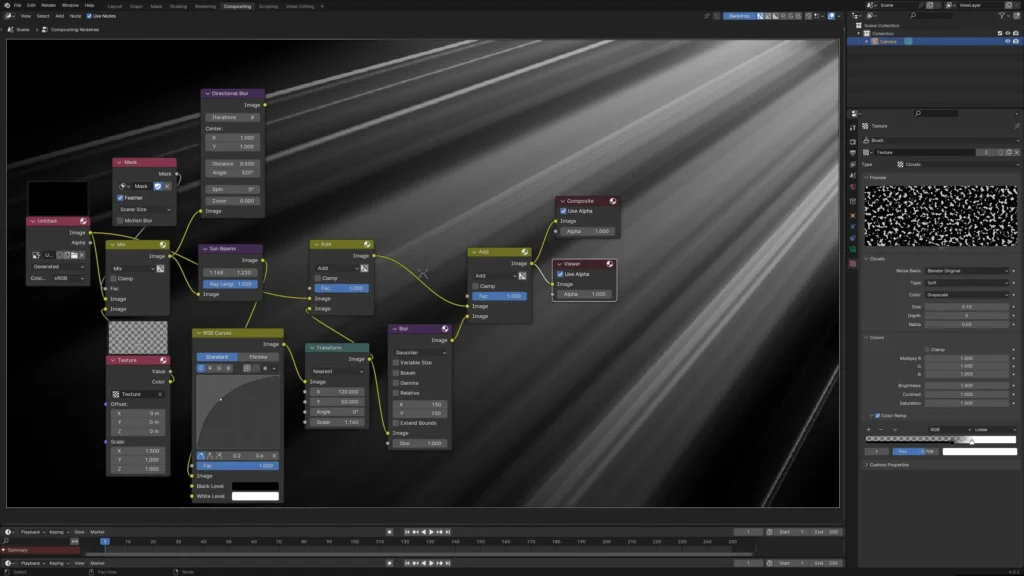
The single most common cause of Blender crashes during rendering is Windows Timeout Detection and Recovery (TDR). Windows monitors your GPU and assumes it has frozen if it does not respond within 2 seconds. Complex Cycles renders easily take longer than this, causing Windows to forcibly reset your graphics driver and kill Blender instantly.
Windows Registry TDR Fix
This modification prevents Windows from killing Blender during heavy GPU operations.
- 1 Press Win + R to open Run dialog
- 2 Type regedit and press Enter to open Registry Editor
- 3 Navigate to: HKEY_LOCAL_MACHINE\SYSTEM\CurrentControlSet\Control\GraphicsDrivers
- 4 Right click in empty space > New > DWORD (32-bit) Value
- 5 Name it TdrDelay (exact spelling, case sensitive)
- 6 Double click TdrDelay > Set Base to Decimal > Enter value 10 (or 60 for very heavy renders)
- 7 Repeat steps 4-6 to create TdrDdiDelay with the same value
- 8 Restart your computer for changes to take effect
Hardware Requirements for Smooth Blender Performance
Understanding hardware bottlenecks prevents wasted troubleshooting time. Blender has split performance characteristics. The viewport relies on single-core CPU speed for calculating modifiers and animations. Rendering scales with GPU compute cores and VRAM capacity. A machine optimized only for rendering may still lag during modeling if CPU clock speed is low.
Blender Hardware Specification Matrix
Intel i5 / Ryzen 5
Intel i7 / Ryzen 7
Intel i9 / Ryzen 9
GPU Driver Configuration for Maximum Stability
Your GPU driver backend determines both render speed and crash resistance. Selecting the wrong API or using outdated drivers causes most stability issues.
NVIDIA Configuration
Use Studio branch for production stability instead of Game Ready drivers
OptiX uses dedicated RT cores for 2-3x faster rendering than CUDA
Enables multi-threaded OpenGL for viewport performance boost
AMD Configuration
HIP provides feature parity with CUDA on RX 6000/7000 series cards
Legacy tiling feature causes major performance regression with HIP
Enabling CPU alongside GPU often reduces stability and speed
Intel Arc Configuration
OneAPI leverages Embree ray tracing library for hardware acceleration
Early drivers had 15 minute kernel compile times, now resolved
Arc A750/A770 offer competitive rendering at lower cost than NVIDIA
Windows Power and GPU Scheduling Optimization
System Performance Checklist
Viewport Optimization to Fix Blender Lag
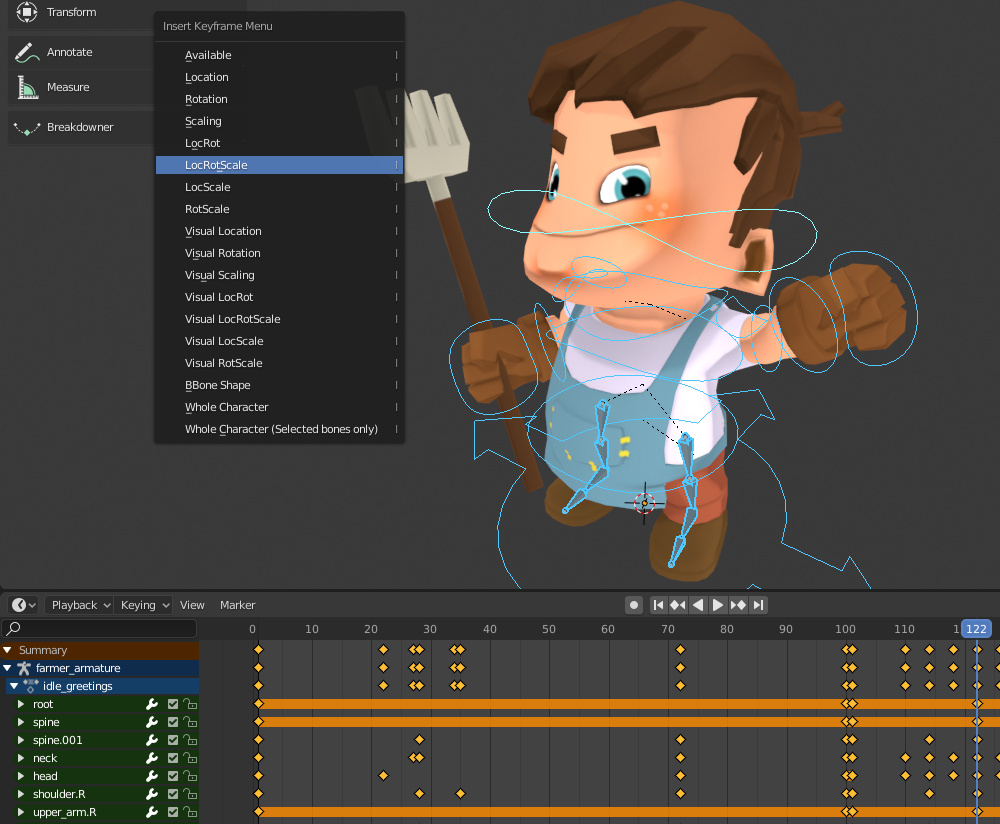
Viewport lag happens when your CPU cannot evaluate the dependency graph and modifiers fast enough, or your GPU cannot draw the resulting geometry within the frame time window. Most lag comes from unnecessary visual overlays and unoptimized modifier stacks.
Disable Viewport Overlays
Overlays like wireframes, face orientation, and normals require GPU to draw millions of extra lines. Toggle off when not needed.
Shortcut: Press Shift+Alt+Z to toggle all overlays instantly
Impact: Often doubles viewport FPS in dense scenes with millions of vertices
Optimize Subdivision Modifier
Subdivision multiplies polygon count exponentially. Level 2 turns 1 face into 16, level 3 into 64. Viewport cannot handle this in real time.
Solution: Render Properties > Simplify > Max Subdiv set to 0 for viewport, keep render at 2
Result: Viewport shows base mesh for smooth interaction, render uses full subdivision
Reduce Undo Memory Limit
Blender saves entire scene snapshots in RAM for undo. Heavy scenes with 32 undo steps can consume 50+ GB of RAM.
Fix: Edit > Preferences > System > Memory & Limits > Undo Steps: 10, Memory Limit: 4096 MB
Benefit: Prevents RAM exhaustion and system paging that causes Not Responding states
Scene Data Management to Prevent Crashes
How you duplicate objects and manage memory determines whether your scene fits in RAM and VRAM. Wrong duplication methods waste gigabytes on identical data.
Duplication Method Comparison
| Method | Shortcut | Memory Impact | Best Use Case |
|---|---|---|---|
| Duplicate | Shift + D | Creates new mesh data. 100 copies = 100x memory usage | When each copy needs unique geometry edits |
| Linked Duplicate | Alt + D | Shares mesh data. 100 copies = 1x mesh + transform data | Identical objects like trees, screws, pillars |
| Collection Instance | Add > Collection Instance | Instances entire groups. Most memory efficient | Complex assemblies like furniture, vehicles |
Cycles Render Settings to Prevent TDR Crashes
Cycles render settings directly affect whether renders complete or trigger Windows TDR timeouts and crashes.
Render Optimization Settings
Diagnostic Tools and Crash Log Analysis
When crashes persist, Blender generates crash logs that reveal the exact failure point. These logs are hidden in Windows temp folders but contain critical diagnostic information.
Windows Location: Press Win+R and type %TEMP% then Enter. Look for files named blender.crash.txt or [projectname].crash.txt.
Key Error Patterns:
• EXCEPTION_ACCESS_VIOLATION in nvoglv64.dll → GPU driver or TDR timeout issue, apply registry fix above
• malloc or memory allocation error → RAM exhausted, reduce undo steps and scene complexity
• Errors in addon names → Disable third party addons in Edit > Preferences > Add-ons
Command Line Debugging: Launch Blender from CMD with blender --debug-cycles to see detailed render logs that persist after crashes.
blender --factory-startup from command line. If crashes stop, the issue is a corrupt preference or rogue addon. Reset preferences in Edit > Preferences > Save & Load > Load Factory Settings.
Storage Speed Impact on Performance
Storage type determines how fast Blender loads files and handles RAM overflow paging. When system RAM fills up, Windows writes overflow data to your storage drive. An HDD at 100 MB per second write speed causes the entire application to freeze during paging. An NVMe SSD at 3000 MB per second handles paging gracefully, acting as a slower tier of RAM and preventing Not Responding states.
NVMe drives also reduce autosave interruptions from multiple seconds to milliseconds. For large production files with hundreds of assets, the difference between loading from HDD versus NVMe is measured in minutes versus seconds. If you have both drive types, install Blender and your project files on the NVMe drive while using the HDD only for final render output storage.
Conclusion
Blender performance issues stem from three primary sources: Windows configuration conflicts like TDR timeouts, hardware bottlenecks in VRAM or single-core CPU speed, and unoptimized scene data management. Start with the Windows TDR registry fix as it resolves the majority of instant crash cases during rendering.
Verify your GPU driver backend is correctly set to OptiX for NVIDIA RTX cards, HIP for AMD RDNA cards, or OneAPI for Intel Arc cards. Optimize viewport performance by disabling overlays, using viewport-specific subdivision limits in Simplify settings, and reducing undo memory consumption. For scene stability, always use linked duplicates (Alt+D) or collection instances for repeated objects instead of full mesh duplication.
Apply these systematic optimizations in order of impact, starting with the registry fix and power settings, moving to driver configuration, then scene optimization. This approach eliminates crashes and restores smooth interactive performance without requiring hardware upgrades in most cases.
FAQ
Why does Blender keep crashing during rendering
Most render crashes are caused by Windows TDR timeout killing your graphics driver when the GPU does not respond within 2 seconds. Complex Cycles renders easily exceed this limit. Fix by increasing TDR registry values to 10 or 60 seconds. Also check for insufficient VRAM or outdated GPU drivers.
How do I fix Blender viewport lag
Toggle off viewport overlays with Shift+Alt+Z to stop drawing wireframes and extra visual data. Set Simplify Max Subdiv to 0 for viewport while keeping render at 2. Reduce undo steps to 10 in Preferences > System. Close background apps like Chrome and Discord that compete for CPU cycles.
What GPU is best for Blender rendering
NVIDIA RTX cards with OptiX support offer the fastest rendering due to dedicated ray tracing cores. RTX 4090 or 4080 for high end, RTX 4070 for mid range. AMD RX 7900 XTX is competitive with HIP backend. Intel Arc A770 is viable budget option with OneAPI. Prioritize VRAM capacity, 8 GB minimum for production.
Should I use CUDA or OptiX for Cycles rendering
Always use OptiX if you have an NVIDIA RTX card (GeForce 20 series or newer). OptiX leverages dedicated RT cores for 2 to 3x faster rendering than CUDA on the same hardware. CUDA is only for older non-RTX cards. Enable OptiX in Edit > Preferences > System > Cycles Render Devices.
How much VRAM do I need for Blender
2 GB is absolute minimum for basic learning. 8 GB is the practical baseline for production work with standard character modeling and architectural visualization. 16 to 24 GB for complex environments, high resolution textures, and heavy sculpting. VRAM is a hard limit, when exceeded the render crashes immediately.
Why is my Blender file so slow to save
Slow saves come from HDD storage or file compression overhead. Install Blender and projects on an NVMe SSD for near instant saves. If using file compression for space savings, note it adds CPU overhead during save and load. Compression helps on slow HDDs by reducing data written but is less beneficial on fast SSDs.
What is the TDR registry fix for Blender
TDR (Timeout Detection and Recovery) is a Windows feature that resets your graphics driver if the GPU does not respond within 2 seconds. This kills Blender during heavy renders. Fix by creating TdrDelay and TdrDdiDelay registry keys in HKEY_LOCAL_MACHINE\SYSTEM\CurrentControlSet\Control\GraphicsDrivers with decimal value 10 or 60.
Should I enable Hardware-Accelerated GPU Scheduling for Blender
Test both states. Some users with high end NVIDIA RTX cards see stability improvements with HAGS enabled. Others experience crashes or performance degradation. Toggle the setting in Windows Settings > System > Display > Graphics Settings and reboot. If Blender crashes, toggle it off. No universal recommendation exists.
How do I prevent Blender Out of Memory errors
Use linked duplicates (Alt+D) instead of full duplicates (Shift+D) for identical objects to share mesh data. Enable Simplify > Texture Limit to 2048px to auto-downscale textures. Use collection instances for complex assemblies. Reduce undo steps and memory limit in Preferences > System. Upgrade to GPU with more VRAM if scene legitimately requires it.
What CPU is best for Blender viewport performance
Viewport relies on single-core CPU speed for evaluating modifiers and dependency graph. Prioritize high boost clock speeds (4.5 GHz or higher) over core count. Intel i7/i9 or AMD Ryzen 7/9 with high boost clocks excel. AMD X3D chips (7950X3D, 9800X3D) offer best of both with large cache and high clocks for modeling and rendering.






 Youtube