

You spend hours practicing aerials with the Octane. A teammate suggests the Fennec. Another swears by the Dominus. You check the stats and see over 100 cars in the garage. The choice feels impossible.
This guide reveals the best cars in Rocket League based on physics data, RLCS 2025 World Championship usage, and hitbox science. You will learn why only 6 invisible hitboxes determine performance, which cars the pros actually use, and how to pick the right vehicle for your playstyle without wasting time on suboptimal choices.
The Science Behind Rocket League Cars
Every car shares the same speed and acceleration. Only hitbox geometry matters.
How Rocket League Hitboxes Actually Work
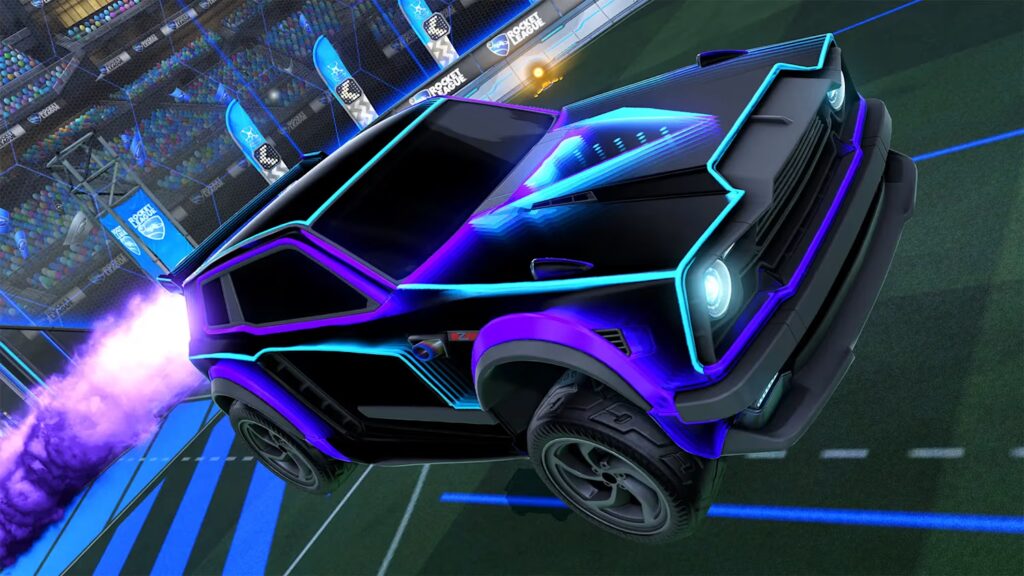
Every car in Rocket League uses one of six invisible collision boxes called hitboxes. These boxes determine how your car hits the ball, wins challenges, and rotates in the air. The visual car model you see is just cosmetic wrapping around this invisible geometry.
All cars have identical speed, acceleration, and boost consumption. The Octane does not drive faster than the Merc. The Dominus does not turn quicker than the Breakout. What changes is the shape of the hitbox, which affects ball contact, aerial control, and challenge outcomes. Understanding this physics standardization is critical before choosing a car.
Complete Hitbox Comparison and Stats
Six Hitboxes Control Everything
Dimensions measured in Unreal Engine units. Higher surface area wins more 50/50 challenges.
| Hitbox Type | Length | Width | Height | Surface Area | Best For | Meta Tier |
|---|---|---|---|---|---|---|
| Octane | 118.01 | 84.20 | 36.16 | 34,495 | All Around | S |
| Dominus | 127.93 | 83.28 | 31.30 | 34,529 | Flicks & Power | A |
| Plank | 128.82 | 84.67 | 29.39 | 34,365 | Defense & Width | A |
| Hybrid | 127.02 | 82.19 | 34.16 | 34,242 | Versatility | B |
| Breakout | 131.49 | 80.53 | 30.30 | 32,679 | Freestyling | B |
| Merc | 120.72 | 76.71 | 41.66 | 34,495 | 50/50 Wins | B |
S-Tier Cars: The Competitive Standard
S-Tier vehicles dominate RLCS tournaments and ranked leaderboards. These cars use the Octane hitbox and provide the best balance of mechanical capability, visual clarity, and competitive reliability. If you want to climb ranks efficiently, start here.
- Visual model matches hitbox almost perfectly
- Boxy shape makes aerial orientation instant
- Preferred by EU pros for consistency
- Flat surfaces ideal for dribbling and flicks
- Requires DLC purchase or trade
- Slightly blocks view during ground dribbles
- Free default car available to everyone
- Open wheel design improves ball visibility
- Sloped nose indicates directionality clearly
- Ten years of community muscle memory
- Hitbox extends slightly past visual nose
- Phantom hits require learning the invisible edges
- Excellent hitbox alignment similar to Fennec
- Elongated nose provides visual reach cues
- Clean design without excessive details
- No significant advantage over Fennec
- Muscle memory reset not worth marginal gains
- Lower customization options
A-Tier Cars: Specialist Powerhouses
A-Tier cars excel in specific roles but require adjusted playstyles. These vehicles use the Dominus and Plank hitboxes, offering offensive power and defensive coverage at the cost of versatility. Competitive players who master these cars become deadly in their specialized zones.
- Longest reach for devastating flicks
- Flat paddle shape perfect for aerial precision
- Power shots faster and harder than Octane
- Excellent for offensive pressure and demos
- Low height loses 50/50s against taller cars
- Ball rolls over nose in head-on challenges
- Defensive liability requiring speed over strength
- Widest hitbox in the game for goalkeeping
- Covers massive goal line percentage
- Unique slapping feel on power clears
- Legendary status from Kuxir97 championships
- Cannot customize with decals or wheels
- Very low height vulnerable in ground challenges
- Requires DLC purchase
- Only Hybrid car with good visual alignment
- Boxy design matches rectangular hitbox
- Balanced length and height statistics
- Unique alternative to Octane/Dominus meta
- Hybrid hitbox has no clear specialty advantage
- Smaller competitive player base means less resources
B-Tier and Niche Cars
B-Tier cars have situational utility but rarely appear in RLCS tournaments. The Breakout dominates freestyle content and 1v1 showmatches due to its extreme length and aggressive pivot point. The Merc wins every ground 50/50 with brute height but feels clunky in the air. These cars work in specific game modes or playstyles but lack the all around consistency needed for competitive 3v3.
Season 21 New Cars and Meta Impact
Season 21 Pursuit in Paris introduced three new vehicles. The Corlay uses the Octane hitbox but suffers from a rounded roofline that makes dribbling inconsistent. The Magnifique and Magnifique GXT use the Dominus hitbox with slightly bulkier visual bodies, potentially bridging the gap between Dominus aggression and Octane stability. Early competitive testing shows promise but no major meta shift yet.
The BMW M4 GT3 EVO and Aston Martin Valhalla represent the Fortnite cross-game integration. Both use Dominus hitboxes but feature complex visual geometry with spoilers, diffusers, and wide body kits. This visual noise makes it harder to identify precise contact points, relegating them to casual play despite technically sound hitboxes.
RLCS 2025 World Championship Car Usage
Professional Player Car Distribution
Common Car Myths Debunked
Physics Facts vs Community Fiction
How to Pick Your Main Car
Find Your Perfect Match
Why Visual Alignment Beats Raw Stats
The Fennec and Octane share identical hitboxes. They have the same length, width, height, and surface area. Yet the Fennec dominates professional play. This dominance stems from proprioception, the brain’s ability to sense spatial positioning without conscious thought.
The Fennec is a box. Boxes are the easiest 3D shapes for the human brain to rotate mentally. When you see the Fennec in the air, you instantly know where its corners are. The Octane is a wedge with a sloped nose. While this slope indicates directionality, it creates ambiguity about where the hitbox truly ends. The Road Hog and Scarab use the Octane hitbox but have rounded or irregular shapes that make corner identification nearly impossible.
This split second of spatial uncertainty translates to missed touches, weak hits, and lost challenges. Professional players operate at speeds where 50 milliseconds determines match outcomes. The car that lies least to your eyes wins.
Conclusion
The best car in Rocket League is the Fennec. Its boxy visual model matches the Octane hitbox with near perfect accuracy, reducing cognitive load and improving consistency. For players who want the best free alternative, the Octane delivers identical physics with slightly worse visual alignment but better field visibility. The Dominus remains the specialist choice for offensive players who master its flick mechanics and accept its defensive weaknesses.
Despite over 100 available cars and six hitbox types, competitive play converges on these three vehicles because visual alignment matters more than raw hitbox statistics. The RLCS 2025 World Championship data confirms this pattern with 90% of professional usage concentrated in the Octane hitbox class. Choose based on your budget and playstyle, but understand that any car outside S-Tier requires justification through specialized skill or situational advantage.
FAQ
What is the best car in Rocket League
The Fennec is the best car in Rocket League for competitive play. It uses the Octane hitbox but has a boxy visual model that matches the invisible collision geometry almost perfectly. This visual alignment improves consistency and reduces missed touches. The Octane is the best free alternative with identical physics.
Do cars have different stats in Rocket League
No, all cars in Rocket League have identical speed, acceleration, turning radius, and boost consumption. The only differences come from which of the six hitboxes each car uses. Cars sharing the same hitbox perform identically in physics calculations despite looking different visually.
What hitbox does the Fennec use
The Fennec uses the Octane hitbox. This means it has identical collision properties to the Octane, Dingo, Takumi, and dozens of other cars assigned to the Octane hitbox class. The Fennec’s advantage comes from its visual model matching the hitbox shape more accurately than other Octane cars.
Is the Octane or Fennec better
The Fennec is objectively better for consistency because its boxy shape matches the Octane hitbox more accurately. However, the Octane offers better ball visibility due to its open wheel design and is completely free. Both cars share identical physics. The Fennec provides a marginal consistency advantage worth the DLC cost for competitive players.
What car do pro Rocket League players use
At the RLCS 2025 World Championship, 72% of professional players used the Fennec, 18% used the Octane, 7% used the Dominus, and only 3% used other cars. European teams heavily favor the Fennec while North American players show higher Octane retention. The Octane hitbox class accounts for 90% of all pro usage.
Is the Dominus good in Rocket League
Yes, the Dominus is A-Tier for competitive play. Its long flat hitbox generates devastating flicks and power shots superior to the Octane. However, its low height makes it vulnerable in 50/50 challenges where taller cars force the ball over its nose. The Dominus requires offensive positioning and game sense to avoid contested ground challenges.
How many hitboxes are in Rocket League
There are six hitboxes in Rocket League: Octane, Dominus, Plank, Breakout, Hybrid, and Merc. Every car in the game is assigned to one of these six invisible collision boxes. Cars within the same hitbox class perform identically despite different visual appearances.
What is the fastest car in Rocket League
All cars in Rocket League have the same top speed and acceleration. There is no fastest car. The perception of speed differences comes from visual design, camera positioning, and engine audio, not actual physics. A Merc drives exactly as fast as an Octane or Dominus.
Should I use the Batmobile in Rocket League
The Batmobile is excellent for defensive specialists and goalkeepers due to its Plank hitbox width. It covers more lateral space than any other car, making it ideal for last man rotations. However, you cannot customize it with decals or wheels, and its extremely low height loses ground challenges. Use it if you prioritize defense over offense.
Are new Season 21 cars competitive
Season 21 introduced the Corlay with an Octane hitbox and the Magnifique with a Dominus hitbox. The Corlay has a rounded roof that makes dribbling inconsistent compared to the Fennec. The Magnifique shows potential as a bulkier Dominus alternative but requires extensive testing. Neither car currently justifies switching from established S-Tier or A-Tier options.



 Discord
 Instagram
 Youtube
 TikTok